On April 24, 2026, Taylor Swift's company TAS Rights Management filed three trademark applications with the USPTO. Two cover her voice. One covers her image in performance.
Here is what the applications actually contain, where the legal analysis gets complicated, and what the strategy means for any creator building a career right now.
What she actually filed
All three applications were filed the same day, represented by attorney Rebecca Liebowitz of Venable.
First sound trademark — Serial No. 99784980
This soundmark covers a specific audio recording of Swift promoting her album on Amazon Music. The filed phrase:
"Hey, it's Taylor Swift, and you can listen to my new album, 'The Life of a Showgirl,' on demand on Amazon Music Unlimited."
Listen to the official USPTO specimen (opens in new tab) →
Second sound trademark — Serial No. 99784979
A different recording at a lower pitch, used for Spotify:
"Hey, it's Taylor. My brand new album 'The Life of a Showgirl' is out on Oct. 3 and you can click to presave it so you can listen to it on Spotify."
Listen to the official USPTO specimen (opens in new tab) →
Visual trademark — Serial No. 99784977
The visual mark covers the performance photograph filed with the application. The USPTO's mark description verbatim:
"A photograph of Taylor Swift holding a pink guitar, with a black strap and wearing a multi-colored iridescent bodysuit with silver boots. She is standing on a pink stage in front of a multi-colored microphone with purple lights in the background."
Color claim: pink, black, purple, and silver.
View the filed specimen on the USPTO record (PDF) →
All three are public federal records. Anyone can look them up in the USPTO trademark search database.
What a soundmark requires
A soundmark is a trademark in audio form. The legal test is identical to any other mark: the sound must function as a source identifier. It tells consumers who a product or service comes from.
The classic examples built that association through consistent commercial repetition. The NBC chimes: three notes, same sequence, always NBC. The MGM lion's roar: plays before the studio's films, always MGM. Intel's five-note jingle, placed identically across decades of advertising. Pitbull's grito, his signature yell derived from traditional Mexican vocal expression, registered as a soundmark after years of documented commercial use.
Each of those sounds stopped being just a sound and became a brand signal. Listeners encountered it the same way, in the same context, repeatedly, until the connection between sound and source was automatic. That learned commercial association is what trademark law protects.
Where the legal analysis gets complicated
The recordings Swift filed tell a different story. Both are promotional clips tied to a specific album release on a specific platform. The first was recorded to drive Amazon Music streams. The second, Spotify presaves. Neither was designed to recur as a consistent brand signal across her commercial output over time.
Trademark law asks a precise question: does this sound identify the commercial source of goods or services to a consumer who encounters it? The NBC chimes answer that in three notes, in any context. "Hey, it's Taylor Swift, listen to my new album on Amazon Music Unlimited" does something else. It identifies her as a person. It promotes a release. Those are not the same function as a mark used consistently to build a commercial source association.
The structural problem goes further. Trademark law does not limit registered rights by the type of use. A registered mark is enforceable against all infringing uses, not only AI-generated ones. If these soundmarks register, the question does not stop at whether an AI company can synthesize her voice. It extends to whether a tribute artist, a parody account, or anyone who deliberately emulates her vocal style faces a trademark claim. That is a significant expansion of what trademark law has historically covered, and the USPTO examining attorney assigned to these applications will need to decide where the line falls.
Standard examination takes 8 to 14 months. Whether the marks survive is one question. What they accomplish in the meantime is another.
What the filings are actually designed to do
A federally registered trademark gives the holder something state-law rights rarely provide: a nationwide cause of action with the ability to demand platform takedowns backed by federal registration. That enforcement tool does not require a lawsuit to be effective.
In December 2025, Disney sent a cease-and-desist to Google, alleging Gemini AI was generating unauthorized copies of Disney's trademarked characters. Google removed the content within 24 hours. No court filing. No judge. A trademark registration enforced through a formal demand letter resolved it in a day.
Swift's team is building toward the same position. An AI company using her voice or image in generated content would face a federal trademark infringement claim on top of any other causes of action. Federal trademark infringement carries statutory damages up to $150,000 per willful infringement under 15 U.S.C. § 1117. It applies nationwide. It can be filed in federal district court.
Matthew McConaughey secured eight trademark registrations in 2025, including a soundmark on "Alright, alright, alright," through the same strategy. Whether or not the USPTO approves Swift's specific marks, any AI company now knows she has a legal team watching the record. That deterrent is real from the moment the applications are filed.
Why artists are improvising with trademark law
The reason any of this matters is that a comprehensive federal AI identity law does not exist.
Swift has been deepfaked in fake ads for Le Creuset kitchenware, in fake political endorsements attributed to Donald Trump, in data collection scams, and in pornographic images that spread across multiple platforms. Meta's AI chatbots used her likeness without authorization. None of it produced federal enforcement because there is no federal statute that directly governs AI-generated identity misuse.
Some states have moved. Tennessee was the first to formally protect the voice as a property right, in 2024. Arkansas, Montana, Pennsylvania, and Utah followed with similar legislation in 2025. California and New York have right-of-publicity statutes that reach unauthorized commercial use of a person's name, likeness, and voice, though the scope varies by situation. The EU's AI Act includes direct prohibitions on unauthorized voice cloning and deepfakes. US federal law has not reached the same point.
So artists are building their legal perimeter from whatever tools exist: trademark, copyright, state voice statutes, platform takedown procedures. None of these is a complete solution. Together, they represent the available options for anyone operating before a comprehensive federal framework arrives.
What this means if you are building a creative career
Swift's advantage is scale, not access. She has a dedicated legal team and corporate entities behind these filings. Most working artists do not. The legal tools she is using, though, are not exclusive to her.
As both a practicing attorney and a working artist, the questions I hear most often from creators are straightforward: Can someone use my name without my permission? Can someone fake my voice in an ad? What do I actually own? The answers all trace back to the same point: what you have registered, and when.
Start with your name. A federal trademark on your artist name, stage name, or brand gives you enforceable nationwide rights to that name. It is the legal foundation. Soundmarks, visual marks, monitoring, and enforcement all build on it.
If you use a specific audio element consistently across your commercial output, a soundmark application may be worth exploring. The standard is high. The sound must function as a source identifier through consistent commercial use, not just be a recognizable clip of your voice. Whether a particular element qualifies is a fact-specific analysis.
You do not need a registered trademark to file takedown requests on major platforms for AI-generated content that misuses your identity. Most platforms have procedures for this. They are inconsistently applied, but they are available now, without waiting for a registration to issue.
If you are in a state with AI voice protection legislation, those protections apply regardless of trademark status. Tennessee, Arkansas, Montana, Pennsylvania, and Utah have specific voice protection statutes. California and New York have right-of-publicity frameworks that reach certain forms of commercial misuse.
The time to address your trademark position is before you need it. Swift faced years of AI-generated incidents before these filings. Most creators cannot absorb that kind of exposure before acting.
Common questions
What is a soundmark?
A soundmark is a trademark in audio form. Like a word mark or logo, it must function as a source identifier: the listener recognizes the sound and associates it with a specific commercial source. Classic examples include the NBC chimes and the MGM lion's roar. The USPTO's trademark registration system accepts soundmark applications through the same TEAS filing pathway used for other marks. The standard is distinctiveness established through consistent commercial use, not simply recognizability.
Did the USPTO approve Taylor Swift's trademark applications?
Not yet. As of May 8, 2026, all three applications are pending examination. Filing is not approval. The examining attorney assigned to each application will evaluate whether the recordings and image qualify as source-identifying marks under the Lanham Act, 15 U.S.C. § 1051. Standard examination takes 8 to 14 months from the filing date.
Can an artist trademark their voice?
Not the voice in general. A specific audio recording used consistently in commerce to identify a brand can qualify as a soundmark. A voice in the abstract is not registrable, for the same reason a person's name in general is not registrable until it functions as a commercial brand. The question is whether a specific use of that voice creates a consistent source identifier through commercial repetition, not whether the voice itself is well-known.
What should artists do now if they are worried about AI misuse of their identity?
Register your artist name or brand name as a federal trademark if you have not done so. Document your commercial use of any audio or visual elements that function as brand signals. Check whether your state has AI voice protection legislation. Set up monitoring for unauthorized use of your name and image on major platforms. None of these steps require waiting for Swift's applications to resolve before you can act.
What legal tools does trademark registration give you against AI-generated misuse?
A registered federal trademark lets you demand platform takedowns, send cease-and-desist letters with clear federal legal standing, file for infringement in federal district court, and seek statutory damages. Under 15 U.S.C. § 1117, willful infringement can reach $150,000 per mark. Disney used this enforcement path in December 2025 to compel Google to remove AI-generated copies of its trademarked characters within 24 hours, without filing a lawsuit.
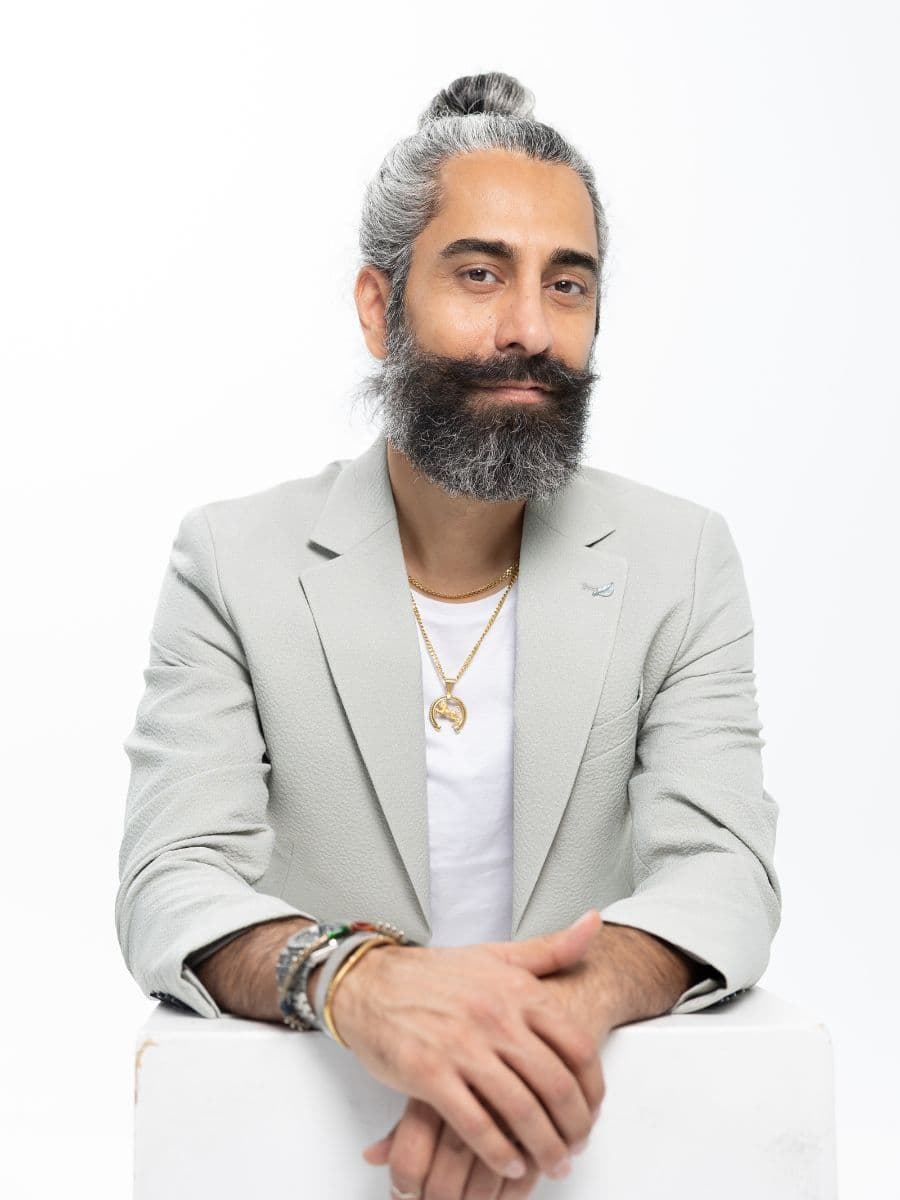
Aghil Ebrahimi is the founder of StarGuard Law, licensed in California, Ontario, and Quebec. He is also a touring artist with 500K+ followers, which means he represents exactly the intersection his clients occupy.
StarGuard Law handles trademark registration from clearance through registration, including soundmark applications and ongoing monitoring. If you are an artist or creator thinking through AI identity protection, see our Artist & Creator Representation practice.
If you are an AI company or tech founder working through the trademark side of your launch, this guide covers the registration process for AI startups specifically.
This article is for general information only — not legal advice.